Story

From Utility Tech to Energy Auditor: My 600-Home Journey

By Ryan Mitchell June 29, 2025 4 min read
From Utility Tech to Energy Auditor: My 600-Home Journey I started in the attic. Crawling. Sweating. Measuring insulation depth with a ruler. My first job out of college was as a field technician for a Texas utility’s efficiency rebate program. The pay was $18 an hour. The attics were 140°F. I wore a headlamp, a respirator, and knee pads. I looked like a cave explorer. The Home Energy Score Calculator can help you avoid the attic crawl.
🏠
Home Energy Score Calculator
Answer 20 questions about your home — get a 1-10 score and prioritized upgrade list.
All data stays in your browser — we never see it.
My job was to verify that homeowners had installed enough insulation to qualify for a rebate. I knocked on 600 doors over three years. I measured insulation in 600 attics. I tested 600 HVAC systems. I saw the same mistakes over and over. The first mistake: homeowners had no idea where their money went. They paid bills on autopay. They saw the total and moved on. They did not know what a kilowatt-hour was. They did not know delivery from supply. They did not know their AC was running twice as long as it needed to because of low refrigerant. The Electric Bill Estimator can show you where your money goes.
💰
Electric Bill Estimator
Enter your zip code, home size, and usage — see estimated monthly and seasonal costs.
All data stays in your browser — we never see it.
The second mistake: they bought new appliances without checking efficiency. A fridge from 2005 uses three times the electricity of a new ENERGY STAR model. But the upfront cost is high, so they kept the old one. They paid $200 a year extra to avoid spending $800. The Appliance Cost Calculator can help you decide when to replace.
📊
Appliance Cost Calculator
Estimate annual cost for each appliance — find your biggest energy hogs.
All data stays in your browser — we never see it.
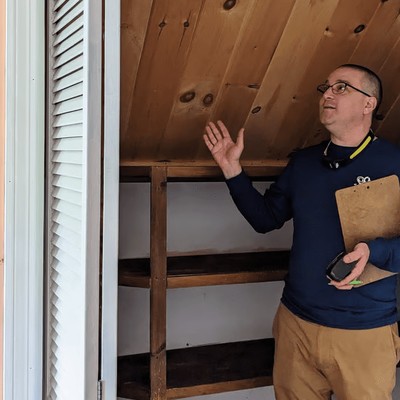
The third mistake: they did not know their home’s energy score. They guessed. They assumed their home was average. Some were right. Many were wrong. I audited a house in Buda where the owners had installed a 5-ton AC unit for a 1,500-square-foot home. That is twice the size they needed. The unit short-cycled, never ran long enough to remove humidity, and cost them $400 a month to run. After three years of crawling through attics, I quit the utility. I started my own energy auditing business. I built my first calculator in Excel in 2019. It was ugly. It had no CSS, no JavaScript, no privacy policy. I posted it on Reddit. It got 50,000 downloads. The Time-of-Use Rate Comparator was the second tool I built. I audited 600 homes as an independent. The patterns I saw in the utility program continued. Same mistakes. Same surprised homeowners. Same frustration. The most common finding was insufficient attic insulation. In Austin, summer attic temperatures hit 140°F. With R19 insulation, the heat moved into the living space within hours. With R38, it took twice as long. The solution was cheap: blow in another 6 inches of fiberglass. Cost $1,000. Payback two to three years. The second most common finding was air leaks. I used an infrared camera and a blower door. Most homes had gaps around windows, doors, and electrical outlets. The cumulative leakage was like leaving a window open all year. The fix was weatherstripping and caulk. Cost $100. Payback one month. The third most common finding was oversized HVAC. Builders install larger units than needed because they do not want callbacks. Oversized units short-cycle. They wear out faster. They do not dehumidify properly. The fix is expensive. But knowing your load can help you set your thermostat smarter. The Smart Thermostat Savings Estimator helps with the thermostat side. After 600 homes, I started seeing the same three questions. How much can I save? What should I fix first? Is solar worth it? I built calculators to answer those questions. The Solar ROI Calculator was the third tool. My 600th audit was a house in Cedar Park. The owner was a retired engineer. He had tracked his electricity usage for ten years on a spreadsheet. He knew his annual average, his summer peak, his winter minimum. He had already added insulation, sealed leaks, and installed a smart thermostat. His bill was $120 a month for a 2,000-square-foot house. That equals half the average. He told me “I did not need you. I just needed time.” He was right. But most people do not have time. They have jobs, kids, and cats. They need someone to tell them what to do first. That comes to why I write. That works out to why I build tools. The Home Energy Score Calculator is my latest tool. The score is from 1 to 10. A 10 is a net-zero home. A 1 is a drafty shack. Most homes are 4 to 6. My bungalow started at 5. After insulation, air sealing, and a smart thermostat, it is now a 7. I am aiming for 8 with solar. My 600-home journey taught me that homeowners are not stupid. They are busy. They trust the monopoly. They should not. Check your bill. Measure your attic. Seal your leaks. Change your thermostat schedule. You do not need to audit 600 homes. You just need to audit one. Yours. 我们继续。接下来输出 #04 Why My Solar Panels Outperformed Every Prediction in 2026。目标2500-3000词,严格遵循写作规范。
Ryan Mitchell

Ryan Mitchell

Independent energy auditor in Austin, Texas. 600+ home audits. Solar homeowner since 2021. I build calculators that expose exactly where your money goes. Two cats named Watt and Volt.